main content

Business

You make the news

Send us your stories and pictures

Qatar builds a future beyond gas

Uta Harnischfeger

  • Last Updated: November 22. 2009 6:27PM UAE / November 22. 2009 2:27PM GMT

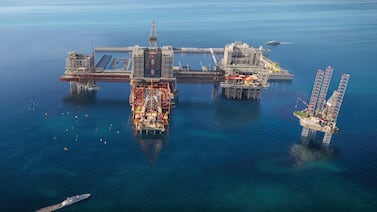
Doha has poured billions of dollars into infrastructure development to diversify the economy away from hydrocarbons Ryan Carter / The National

When Qatar built the Museum of Islamic Art a few years ago, the Emir gave the star architect IM Pei carte blanche to design what has become Doha’s most famous building.


The cubist composition of square and octagonal blocks has become a centrepiece in Qatar’s quest to transform itself into a major destination for the arts and culture as much as commerce and industry.

“Doha is in many ways virginal. There is no real context there, no real life unless you go into the souk,” the architect said at the time.

But the world’s largest exporter of liquefied natural gas is determined to change that perception and is raising billions of dollars from international debt markets to transform its economy.


“The government has spent a lot of time and effort to put Qatar on the map,” says Habib Oueijan, the managing director of Majid Al Futtaim Asset Management.

It has poured billions of dollars into infrastructure development to diversify the economy away from hydrocarbons, become an international financial hub and grow an international property portfolio that already includes vast tracts of prime London commercial space.


With plans to almost double its gas output by the end of next year and expecting economic growth of 11.5 per cent for this year, Qatar is on an unprecedented growth trajectory.

Income from oil and gas accounts for about two thirds of its budget. With per capita income of about US$85,000 (Dh312,200), Qataris have even overtaken the Swiss as the world’s richest people.

Last week, the country issued $7 billion in fresh bonds, the largest single-day bond issue of an emerging market.


“Qatar has always been very progressive managing its funding requirements,” says Adel Afiouni, the co-head of global securities in MENA for Credit Suisse. “They have a strong story, they have a progressive financial attitude towards the capital markets and have done a tremendous job with their economy.”

Qatar, alongside Abu Dhabi, enjoys the highest sovereign rating in the Middle East. It even managed to raise an $3bn last April, when global investors were in crisis mode. That is because of the quality of its collateral that lies below the ground.


“It is leveraging itself on future gas income – and investors are buying it,” says one lawyer who did not want to be named.

While the country has more than enough hydrocarbon cash to pay for its infrastructure projects, its painful experience with high inflation – which was turbocharged by heavy money inflows during last year’s oil price boom – has fostered a greater emphasis on stability in funding its growth.


“It makes sense to finance long-term projects with bonds where there is investor appetite. At the end of the day prospects look strong and they match the liabilities,” says John Sfakianakis, the chief economist at Banque Saudi Fransi-Credit Agricole in Riyadh.

While Qatar invests in projects at home, it is also working hard to increase its profile overseas, a move the country’s leadership hopes will pay dividends in establishing the country as a draw for tourists and investors alike.


Today, much of the Arab world turns for its news to Al Jazeera, the satellite news network based in Doha. And the national carrier, Qatar Airways, is increasingly visible in Europe through its sponsorship of weather reports on Sky News.

Education is another important strand of Qatar’s grand plan for transformation. Generous government funding has turned Qatar’s Education City into the largest outpost of US universities in the Middle East.


Qatar’s gas riches have allowed it to expand its international financial footprint in recent years by acquiring property and stakes in global corporations. And that is likely to continue, as it plans to boost its London property investments to £5bn (Dh30.31bn) from £3bn, and also wants to increase its stake in Volkswagen to 17 per cent from 6.7 per cent.

Its sovereign wealth fund, the Qatar Investment Authority that is valued at an estimated $60bn, holds stakes in car makers, banks and grocers. The fund’s returns contribute about a quarter of the country’s income.


This year, Qatar has quietly become one of London’s biggest commercial landlords, Volkswagen’s third-largest shareholder and one of the largest clients of Airbus, the aircraft manufacturer. It has long been the largest shareholder of Credit Suisse and Barclays, and owns stakes in the UK grocery chain J Sainsbury as well as in Lagardere, the French conglomerate, and the London Stock Exchange.

While the country has big plans, Qatar has a small population – which economists say could pose the most significant obstacle to its ambitions.


With about 250,000 Qataris and 850,000 expatriates, the population amounts to barely 1.1 million. That means the government will always face an uphill battle to generate sufficient domestic consumption.

“Qatar’s hurdle is definitely more structural. The recovery of the private sector will take a while, more time than other markets who have more of a domestic economy,” says Mr Sfakianakis.

Qatar just does not have the population to support growth and to spread the wealth around.


“All these companies, whether it is banks or telecommunications, need to see growth once the government stops spending. But where will that come from?” says Mr Oueijan.

While Qatar is making the effort to to ease its dependence on energy, it still has some way to go.

“Have they succeeded in diversifying? No. The attempt is certainly there, but one cannot say that they have succeeded quite yet,” says Mr Sfakianakis.


But by avoiding a supercharged growth model such as the one seen in Dubai during the boom years, Qatar may have spared itself from the long-term consequences of such leveraged expansion.

“Granted, everyone wanted to build their own Palm and Qatar built its Pearl. But there was only a little bit of excess in Qatar,” says Mr Sfakianakis. “Qatar saved itself by the fact that it lagged Dubai. It was the one following and trying to catch up.”


Bankers say the country’s current fund-raising efforts are manageable by most measures.

“Their capital expenditure plans are enormous and this will necessarily entail a reliance on the capital markets for funding,” says Simon Williams, the chief economist of HSBC Middle East. “I have no concerns about the scale or sustainability of the debt they are contracting.”

Barely a week before its issue of $7bn in sovereign bonds, one of Qatar’s largest lenders set a landmark. Commercial Bank of Qatar’s successful $1.6bn bond issue marked a new sign of investor trust because it is not owned by the government and the debt is subordinated, meaning some investors would be served later than others in case of a default.


“So far, all other issuers have benefited from the implied government guarantee halo. Commercial Bank of Qatar was the first not to. The fact that they can issue this on their own two feet is a huge sign … that the market is normalising,” says Klaus Froehlich, the head capital market business in the Middle East at Morgan Stanley.

Qatar will need to keep attracting investors if it is to achieve its economic vision. By 2011, it plans to open a new $14bn international airport as it seeks to wrestle passengers from other hubs in Dubai, Abu Dhabi and Bahrain. It is also likely to challenge its Gulf neighbours for investors. As Abu Dhabi works towards opening its Guggenheim and Louvre museums in 2012, the Emir and LM Pei could already be plotting their next move – and where to get funds for it.


uharnischfeger@thenational.ae


  • Send to friend
  • Print
  • Bookmark and Share
  • Bookmark & Share

Have your say


Please log in to post a comment